Most founders choose a payment platform based on fees and features. That’s reasonable.
But there’s a cost most people don’t account for: how much time each platform adds to your support workflow.
Every refund request, failed charge, subscription pause, or billing question sends you to a second tab.
You hunt down the customer in your payment dashboard, check their subscription status, figure out what action to take, then return to your email to reply.
Done manually, that loop takes roughly 7 minutes per ticket. Twenty tickets a day means over two hours gone — every single day.
The platform you choose directly shapes how painful that loop gets. Paddle, Stripe, and Lemon Squeezy each handle billing differently, and those differences show up in your inbox every morning.
What Paddle Handles for You
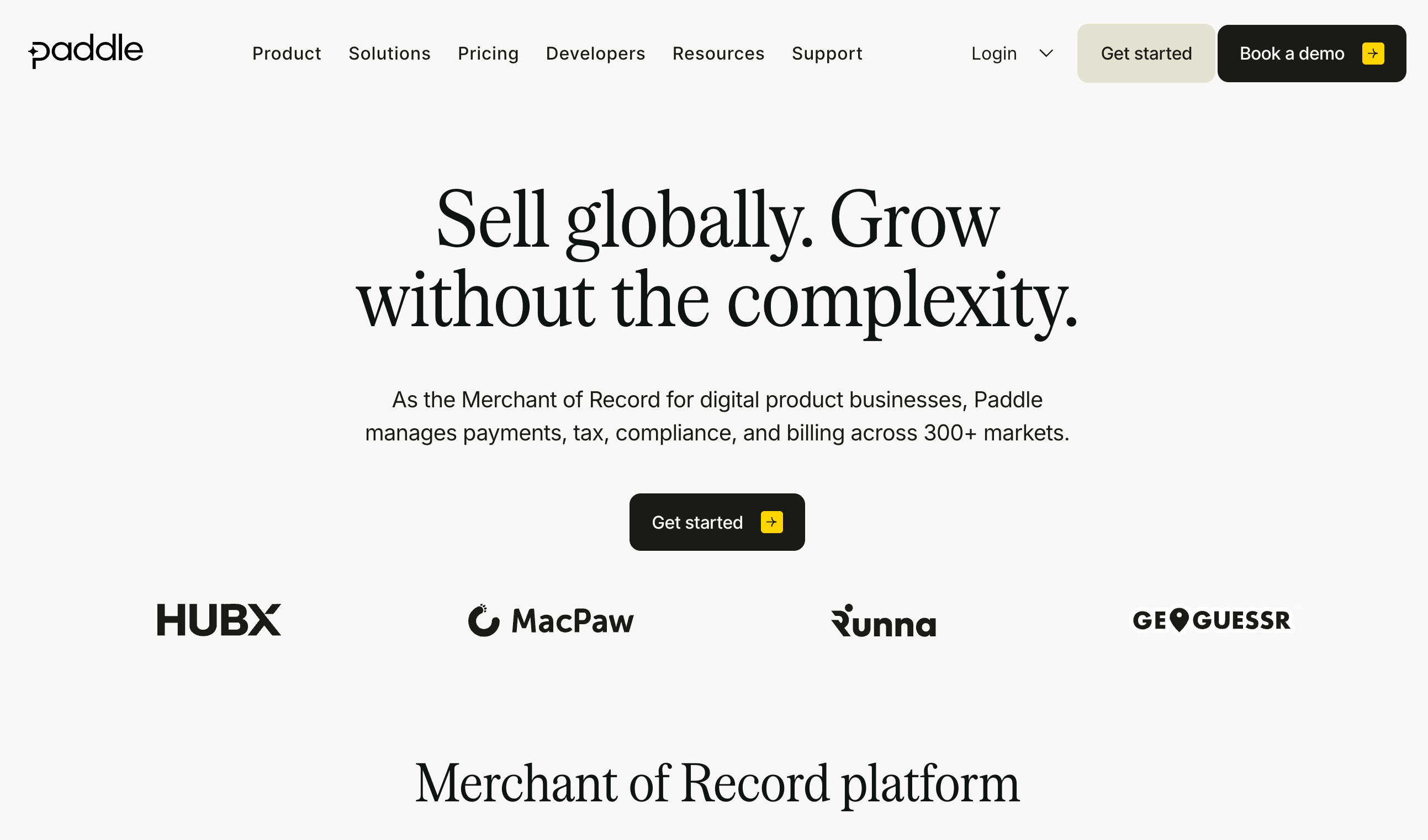
Paddle acts as the merchant of record. It collects payment, handles sales tax and VAT across jurisdictions, manages chargebacks, and issues invoices on your behalf.
The compliance picture gets simpler, especially if you sell internationally.
Pricing is percentage-based per transaction rather than a flat monthly fee. The trade-off is straightforward: you pay more per transaction, you deal with less compliance overhead.
Because Paddle owns the transaction layer, customers often email you about charges that show up under Paddle’s name on their card statement. That creates a predictable support pattern: “I don’t recognize this charge” tickets that require you to verify the customer, locate the Paddle transaction ID, confirm the subscription, and explain the billing descriptor.
Refunds and cancellations run through Paddle’s API or dashboard.
Done manually for every request, it’s slow. Paddle’s API is well-documented, so tools that integrate with it can automate those lookups and actions — but out of the box, you’re still switching tabs.
What Stripe Handles for You
Stripe is the most flexible of the three.
It covers payment processing, subscription billing, invoicing, and a wide range of payment methods.
It doesn’t act as a merchant of record by default, so tax compliance, VAT collection, and chargeback management stay on your plate.
The API is the most mature in this group. Custom billing logic, usage-based pricing, deep product integrations — Stripe gives you the most room to build.
That power comes with a cost: the dashboard is dense.
When a customer emails about a failed charge or wants a refund, you need to find them in Stripe, check their subscription object, review recent payment intents, then take action. Every time.
Not hard if you know Stripe well. But when a support email lands mid-focus, the context-switching adds up fast.
Stripe also doesn’t surface customer intent for you — you read the email, open Stripe separately, cross-reference manually, then reply.
The upside: Stripe’s API coverage is comprehensive. Any tool that integrates with it can pull subscription status, payment history, and customer data automatically. That’s where the real workflow gains live.
What Lemon Squeezy Handles for You
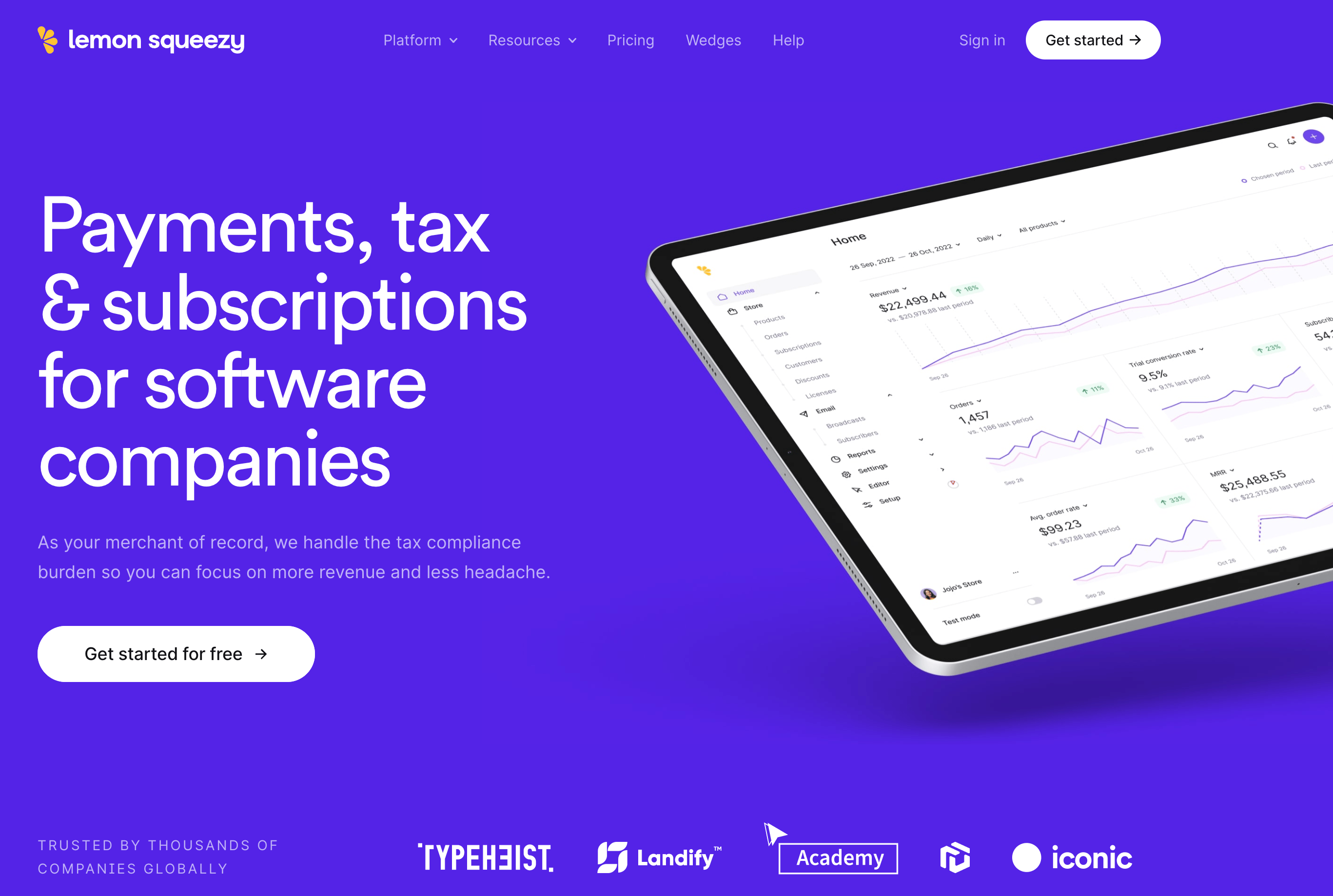
Like Paddle, Lemon Squeezy acts as a merchant of record. It handles global tax compliance, payment processing, and subscription management.
It was built specifically for indie developers and small SaaS teams, so the interface is cleaner and onboarding is faster than Stripe.
Fees are percentage-based. The setup experience is notably simpler, and the product has strong appeal for founders who want to ship fast without configuring a full billing stack from scratch.
The merchant-of-record model creates the same billing descriptor issue as Paddle. Customers may not recognize “Lemon Squeezy” on their card statement, which generates “I didn’t authorize this” tickets.
That said, Lemon Squeezy’s simpler data model means less to dig through when handling a refund or cancellation. The API is solid enough for integrations to pull subscription status and trigger actions programmatically.
For indie founders running lean, Lemon Squeezy often creates the least cognitive overhead per ticket — the subscription data is less complex.
The trade-off is less flexibility for custom billing scenarios.
Side-by-Side Comparison: Support Integration in 2026
| Feature | Paddle | Stripe | Lemon Squeezy |
|---|---|---|---|
| Merchant of record | Yes | No (by default) | Yes |
| Tax/VAT handling | Automatic | Manual or via Stripe Tax | Automatic |
| API maturity | High | Very high | Moderate |
| Dashboard complexity | Medium | High | Low |
| Billing descriptor confusion | Common | Less common | Common |
| Best for | International SaaS, compliance-first | Custom billing, high-volume | Indie founders, fast setup |
| Support ticket volume drivers | Descriptor confusion, refund requests | Failed charges, subscription issues | Descriptor confusion, plan changes |
| Integration availability | Good | Excellent | Good |
Which Platform Creates the Least Support Overhead?
There’s no clean answer. It depends on which tickets are eating your time.
If billing-descriptor confusion is your main problem, Stripe wins on that specific metric — customers see your company name on their statement, not a third-party processor.
If you’re getting hammered by tax and compliance questions from international customers, Paddle or Lemon Squeezy take that burden off your hands.
If you need deep API integration for automated support tooling, Stripe gives you the most to work with.
For solo founders and small teams in the $1K-$50K MRR range, the practical answer is usually: pick the platform that fits your billing complexity, then solve the support workflow problem separately.
The platform shapes the type of tickets you get. Your support tooling shapes how fast you close them.
How AI Support Tools Connect to All Three
The real efficiency gain in 2026 isn’t picking the “right” payment platform. It’s connecting your payment platform to your support inbox so you stop switching tabs.
The manual loop looks like this: email arrives, open Stripe or Paddle or Lemon Squeezy, find the customer, check their status, draft a reply, go back to email, send. Seven minutes per ticket, on average.
An AI support inbox that integrates with your payment platform changes that loop entirely. By the time you open the ticket, the customer’s subscription status, last payment, and relevant history are already pulled and waiting. The AI drafts a reply based on that context. You review it, approve it, and the ticket is closed in under 2 minutes. The AI suggests. You approve. Done.
Zipitly connects directly with Stripe and Lemon Squeezy. When a support email comes in, it reads the intent, pulls the customer’s data, drafts a reply, and surfaces one-click actions for refunds, pauses, cancellations, and credits.
You click Approve. Nothing sends or executes without your confirmation.
The integration handles the tab-switching problem so you don’t have to.
Setup takes under 60 seconds. One DNS TXT record gives you a real support@yourcompany.com address — no Google Workspace subscription required.
The Bottom Line
Paddle, Stripe, and Lemon Squeezy each make different trade-offs. Stripe gives you the most control and the deepest API. Paddle and Lemon Squeezy handle tax compliance for you.
None of them reduce support tickets on their own.
The faster path to cutting support overhead is connecting whichever platform you use to an inbox that already knows what the customer needs before you open the ticket.
If billing-related support emails are eating more than an hour of your day, that’s the problem worth fixing.
Start a 7-day trial at app.zipitly.com. Starter is $19/mo.